- paměť závad nečtena
- nelze se spojit / asi chyba auta
- trvalá závada
- sporadická závada
Doposud provedeno bez úspěchu
Nothing
Závěr
VOZIDLO JSEM OPRAVIL
Replace ignition cable, carburettor adjustment, distributor shaft repair.
Note: At the beginning, we had no intention of doing any repairs, but a hi-tech device and step-by-step diagnostic approach revealed three problems.
Obrázky, fotografie a soubory
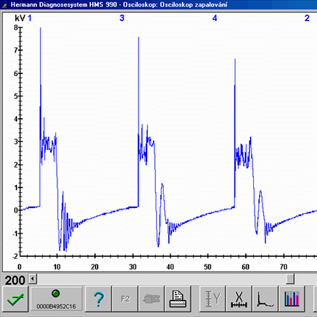
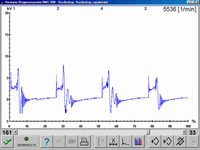
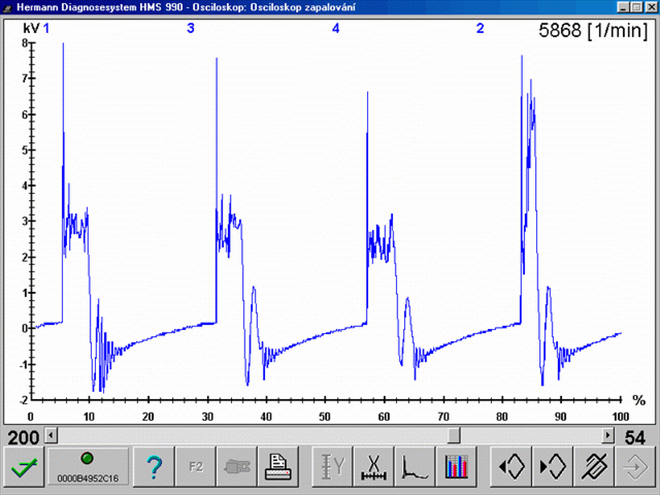
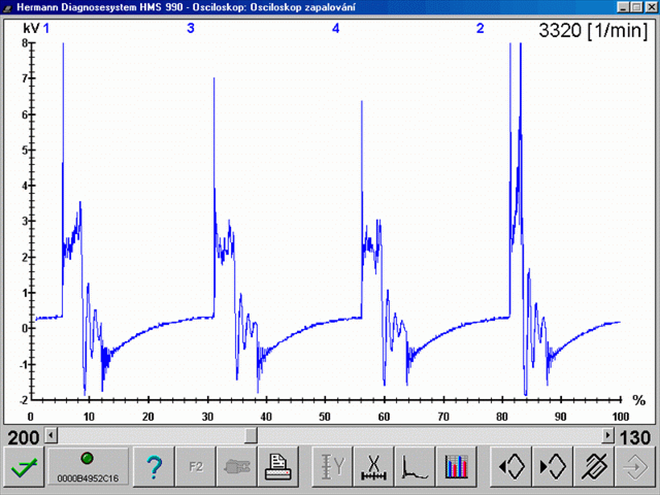
Pic. 1: Spark voltage (286/1)
After inspecting the secondary ignition waveform, it was revealed that it had a shorter burn time (compared to other cylinders) and a higher burning voltage (kV). During acceleration, the burning voltage reached 6kV, which was twice the value of the other cylinders. The problem was immediately identified as an ignition cable fault.
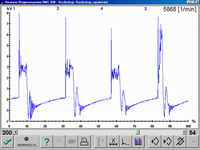
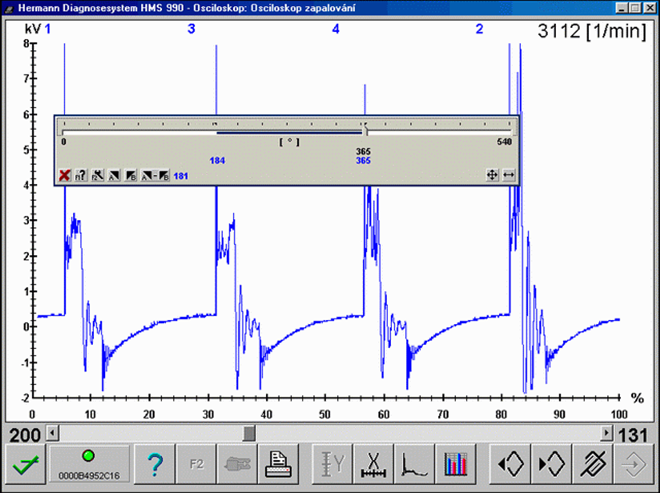
Pic. 2: After ignition cable replacement (286/2)
After replacing the ignition cable, the ionised arc voltage started correctly at 2kV, but increased at the end of the burn time to the same level as the flashover voltage. This is a sign of a lean mixture. The lean mixture was seen only on cyl #2. The customer explained that he made his own emulsion tube for this carburettor because it was missing, when he purchased the car. It is possible to adjust the carburettors on this racing engine individually. We adjusted the A/F mixture of cyl #2 to the level of the other cylinders with the help of the scope.
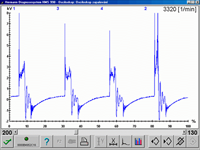
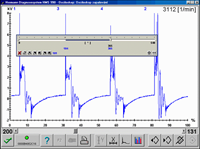
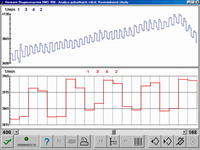
Pic. 3: Irregular firing times (286/3)
After performing an engine balance test, we found another problem. With the help of the Axe Ruler application, we discovered uneven spacing (time) between the firing voltage. It seems like there is a different advance setting for each individual cylinder.
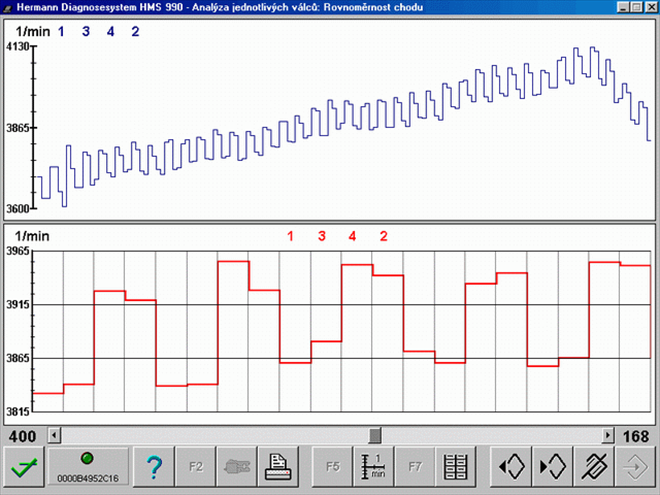
Pic. 4: Cylinder balance test (286/4)
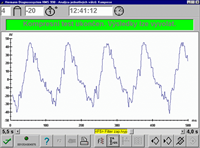
The engine balance test revealed that two cylinders were experiencing a decrease. This test is performed by measuring the time between two consecutive cylinder firings (from start of one firing to the start of next cylinder firing). This takes into consideration the geometry of the mechanical ignition, including the dwell angle. So the Axe software ruler application didn't lie.
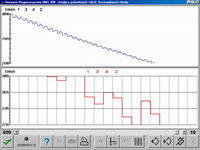
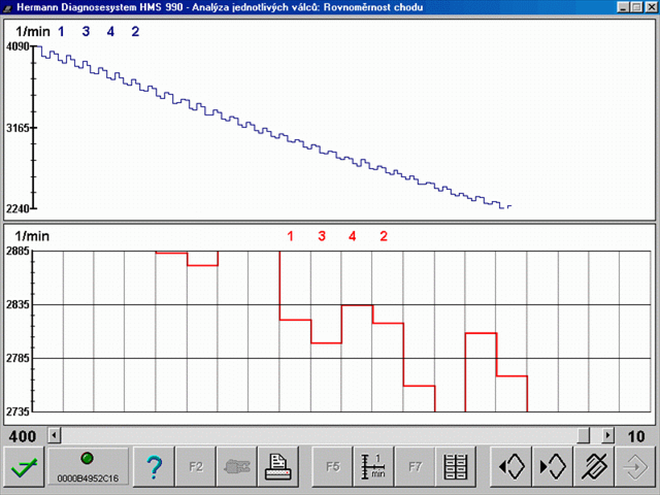
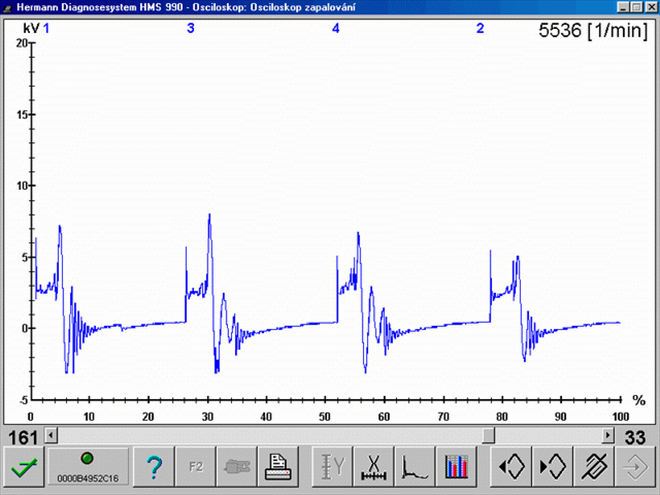
Pic. 5: Irregular spark distribution (286/5)
We were surprised to see the same drop in rpm, even during deceleration. Deceleration is the gradual decrease of the engine speed all the way to idle, while the throttle is closed. From this recording, we concluded that there is a fault in the spark distribution system. The customer informed us that the vehicle was involved in an accident.
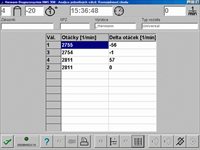
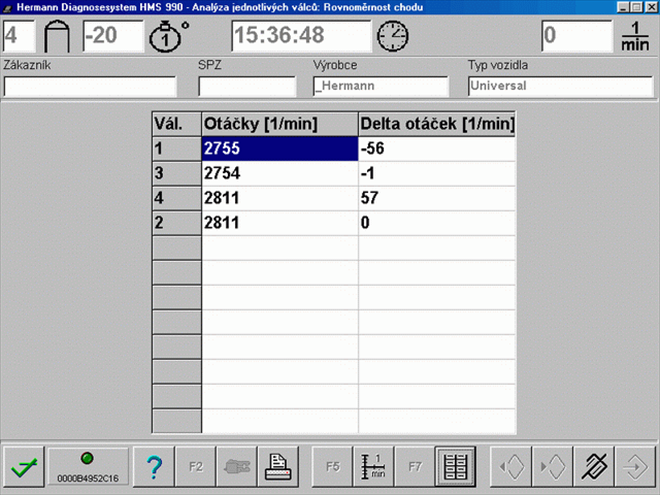
Pic. 6: Cylinder balance result (286/6)
The table displays the difference in rpm between individual cylinders, which is the theoretical increase and decrease of rpm calculated by the motor tester. There is a significant difference.
Pic. 7: After A/F mixture adjustment (286/7)
The burn time has been extended sufficiently after the adjustment of the cyl. #2 A/F mixture. Also all the other cylinders were adjusted, to achieve lower jump over voltage, (lambda value 0.86 - 0.89). The A/F mixture is correct for maximum engine performance.
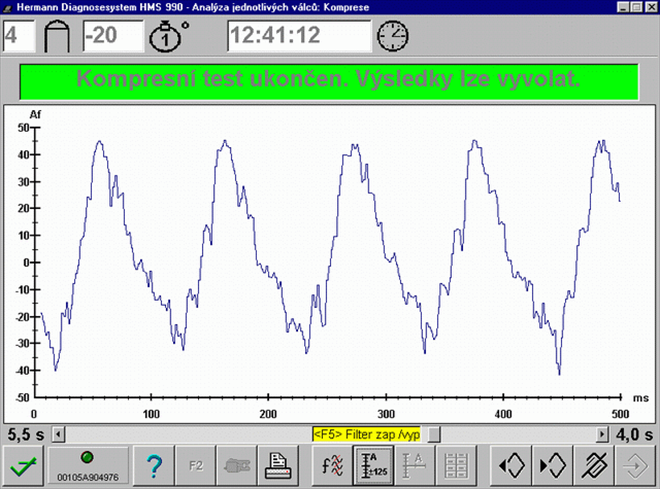
Pic. 8: Compression test (286/8)
In addition, we also performed a compression test, without assigning the individual cylinders (carburettors were full of fuel). There was no reason in doing so, because the measured figures were about the same.
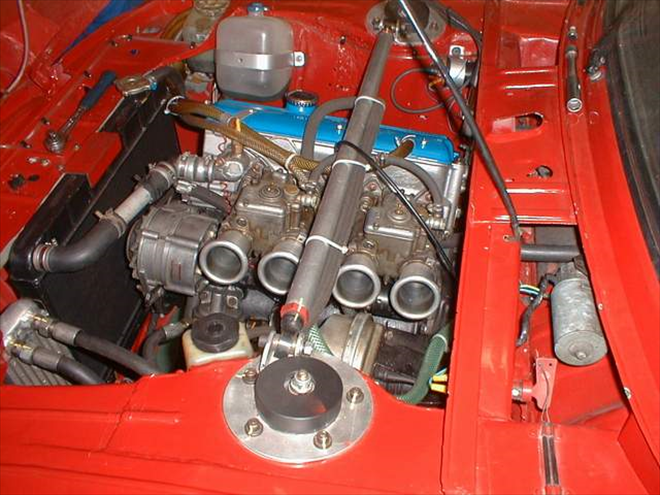
Pic. 9: Engine view (286/9)
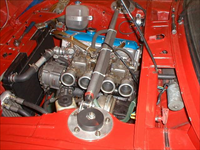
Here is very nice picture of the engine.
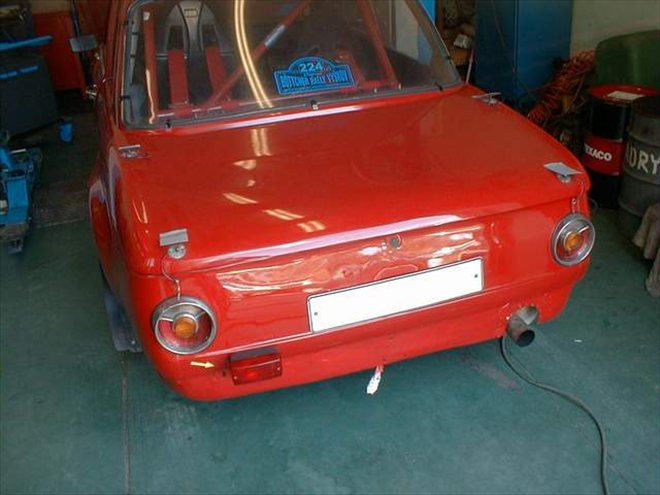
Pic. 10: Rear view (286/10)
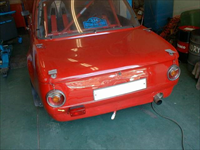
Here, just for the joy, you can see this beautiful car from the rear.




Komentáře (0)